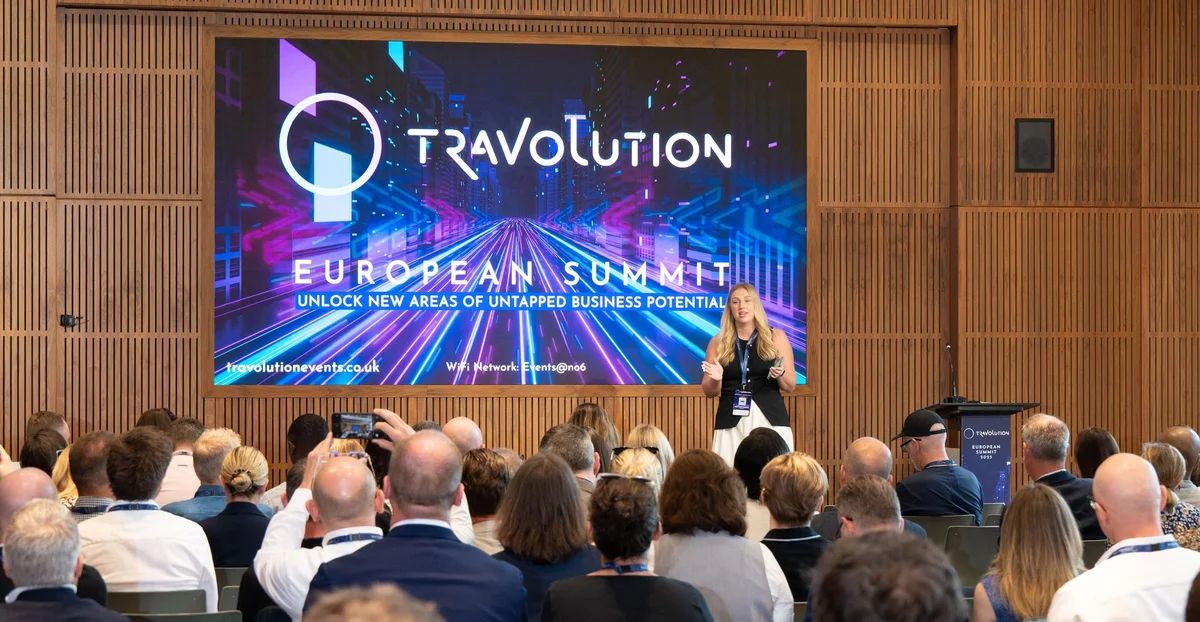
When $27.6T in annual transaction volume surpasses both Visa and Mastercard combined, you can’t dismiss it. That’s exactly what stablecoins achieved in 2024 according to CEX.io: industry analysts say that we’re at the “second inflection point” for blockchain adoption, and last week at the Travolution European Summit in London we unpacked why this matters for travel.
Our panel crystallized a fundamental insight: in travel, blockchain only delivers real value when coupled with payments. The numbers tell a compelling story - stablecoin market caps are projected to double their 2024 volume, reaching $400B by 2025 year-end according to Bitwise Asset Management. This isn’t about technology, but enabling what travel desperately needs: faster, cheaper, programmable cross-border transactions with “real money”.
We explored the evolution of B2C first. While Destinia confirmed that crypto payments for travel have declined post-pandemic (shifting from payment vehicle to investment asset), Stripe highlighted that offering stablecoin and crypto options in booking engines still proves valuable. As is always the case with adding new payment options, someone will use them, validating the existence of a Web3 audience willing to spend crypto while generating additional revenue - which never hurts.
Where the real traction is happening, though, is in B2B. According to Visa and Allium Labs, while over 90% of stablecoin transaction volumes come from automated systems and large-scale traders, the remaining still represent $150B monthly in “organic” transactions. In travel, stablecoins particularly shine when enabling micro-payments for ancillary services up the distribution funnel, or down the funnel to payouts in destination. They excel at facilitating multi-party commissions and providing settlement within escrow - all while making business cases palatable to CFOs thanks to stability and regulation.
I believe it was particularly insightful to hear Lufthansa Group’s validation of this strategic long-term payments-on-blockchain vision. They demonstrated at their recent hackathon not just the speed of establishing connections, but especially the possibility of onboarding agencies in non-BSP contexts and using blockchain as a cross-border payments enabler (also nice that they’re implementing this on Camino Network and asking their partners to do the same, which doesn’t hurt either).
Many thanks again to my fellow panelists for their invaluable perspectives. Most gratifying was seeing those “a-ha moments” on audience faces when they grasped what’s possible with blockchain and stablecoins as fundamental travel tech building blocks. From our and Stripe’s infrastructure perspective, it makes sense to prepare a set of integrated products to enable these use cases.
And yes, we had the last session before lunch and still a full room! That’s when you know you’ve hit on something that matters.
#TravoSummit #TravelFi #StablecoinAdoption